No full-body ice bath, no breath-holding, no drama. Just a bowl of cold water, some ice and a snorkel.
— The Story —We learned this from Nathan Siles. He's been teaching it since 2015.
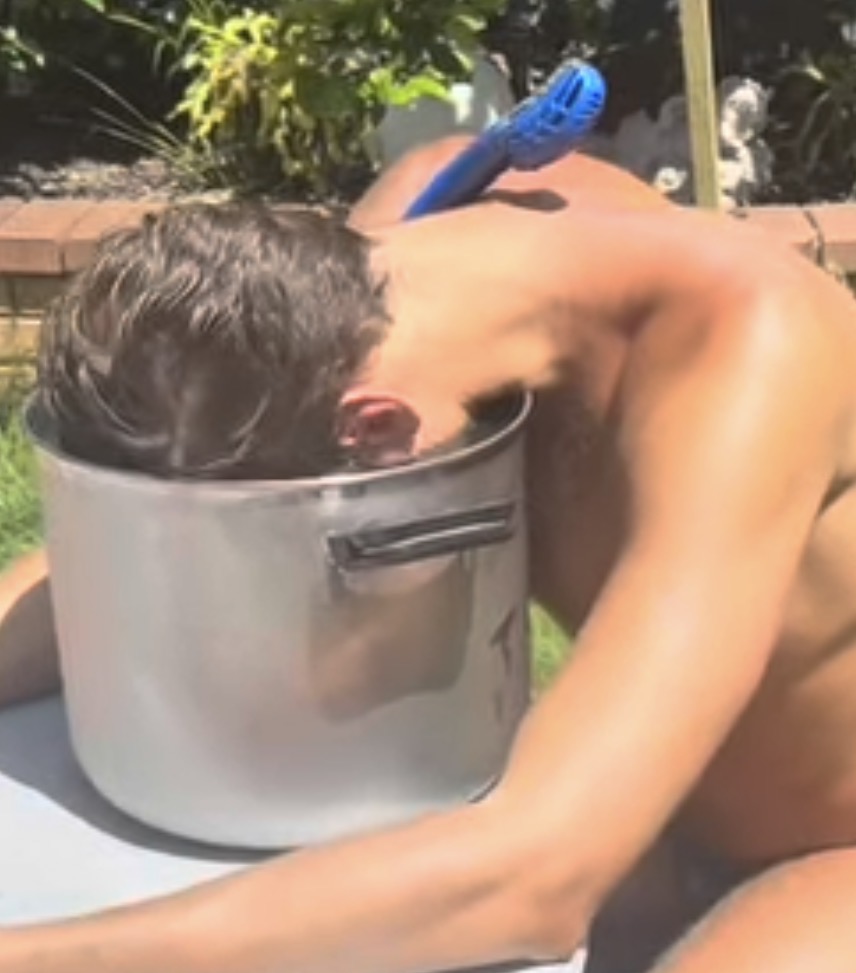
We've both been doing it for over a year now. When we're near the coast, it's the sea at sunrise. When travelling or when the ocean isn't an option, this is what we turn to. Two to three minutes and the mental clarity afterwards is immediate.
We recommend it to all our clients. Whether you're a weekend golfer looking to feel sharper on the first tee, or a competitive player chasing every edge — the nervous system reset works the same way.
— Why the Face —Your face has three branches of the trigeminal nerve running through it. When cold water hits them, it triggers something called the mammalian dive reflex — a built-in reset that every human has. This is not a willpower exercise. It's a biological switch.
Ophthalmic
Around your eyes and forehead. This is why cold water on your face helps your eyes recover.
Maxillary
Your cheeks and upper jaw. The cold reaches deep into the structure of your face.
Mandibular
Your lower jaw and chin. The third branch completes the full trigeminal stimulation.
Get a silicone snorkel. A simple, medical-grade mouth snorkel. About $3 from Amazon. Nothing fancy.
Fill a bowl or bucket with cold water. Around 10°C / 50°F is enough. Add some ice if your tap water isn't cold enough. No need to go colder.
Start with cold water on your forehead. Before you dunk, spend a few days just pressing a cold, wet cloth or splashing cold water on your forehead and face. Let your body get used to the sensation. When that feels comfortable, you're ready.
Put the snorkel in your mouth and dunk your face in. Submerge up to your ears. Breathe gently through the snorkel.
Gently move your face. Small, slow movements. Let the cold reach all three branches of the trigeminal nerve.
Stay for 2 to 10 minutes. Start with 2–3 minutes. As you get used to it, you can build up. Breathe slowly — 2 to 3 breaths per minute.
The snorkel is the key — it removes the stress of holding your breath, so you stay in the parasympathetic zone the entire time.
Heart rate drops
Around 20 beats per minute. Your body shifts into conservation mode — the mammalian dive reflex at work.
Breathing slows
Down to 2–3 breaths per minute. Breathe less, age less.
Blood vessels expand
Your blood vessels open up and your blood pressure drops. More blood flowing, less resistance. A direct parasympathetic response.
Oxygen saturation rises
Your body holds onto oxygen more efficiently. More oxygen reaching your cells with less effort.
Mental clarity
The first thing you'll notice. The fog clears. You feel sharp and calm at the same time. Imagine that on the first tee.
Parasympathetic tunnel
A direct line into your rest-and-repair nervous system. Nothing else does this as quickly or simply.
The three branches of the trigeminal nerve on your face all connect to one hub deeper inside your skull — the trigeminal ganglion.
When cold hits your face, the signal travels inward along all three branches to that hub. The hub vibrates. That vibration reaches your vagus nerve.
Nathan teaches that this process also helps clear deuterium from the brain.
It flushes it out through two pathways: the glymphatic system and the cerebrospinal fluid.
This is also why Nathan does it for his eyes. The ophthalmic branch — the one that runs across your forehead and around your eyes — passes right by the photoreceptors at the back of your eye. Cold stimulation supports their repair and regeneration.
In short: a $3 snorkel and a bowl of cold water gives you a neurological reset that reaches deep into your brain's cleaning system. Simple on the surface, profound underneath.
Best moments
- First thing in the morning, before anything else
- Before a round — the locker room is your friend
- After a long day of screen work or travel
- Before a tournament round or any pressure moment
- When you feel mentally foggy or overwhelmed
What you need
- A silicone mouth snorkel (~$3)
- A bowl or bucket
- Cold water (add ice if needed)
- 2–10 minutes
- No special training, no gym, no equipment
We learned this from Nathan Siles. He's been teaching it since 2015.
A note on safety: Cold face immersion slows your heart rate and can change your blood pressure. If you have a heart condition, blood pressure issues or take medication that affects either, check with your doctor first. Never practise alone, and always keep your airway clear. Start gently — a cool cloth on the face is a good first step before full immersion.
Want to see how this fits into the full picture?
Cold is one piece. Light, water and magnetism work together. The subscription gives you the video coaching, the golf-specific programming, and the community.
Join 7.83 Golf